

Jay Kellyfollows an aging movie star whose tightly managed life starts to fall apart when he’s finally pushed to face the emotions he’s been running from for years. Ron, Jay’s longtime manager, fixer, and basically the guy who cleans up every emotional mess Jay avoids joins him on a sudden trip across Europe. Jay is loved by many, but he’s drifting farther and farther away from his own life. Stepping away from the nonstop machine of his career feels small at first. Then the trip slowly turns into a quiet look back at the friendships, romances, and regrets he’s tried to bury.
Noah Baumbach approaches this material with the familiar emotional language that has shaped much of his filmography. He gravitates toward fractured family dynamics, flawed protagonists, and the people who orbit them with unspoken devotion. In Jay Kelly, Baumbach once again writes a self-absorbed central figure paired with a quieter, more grounded character whose presence reveals the emotional undercurrents the protagonist refuses to confront. It’s a dynamic he understands deeply, and one he uses to explore larger questions about meaning, happiness, and the way our personal ambitions reshape the people around us.
The movie isn’t a mystery or some big dramatic makeover. It’s more of a gentle look at aging, regret, fame, and the price you pay when you define yourself by the roles people expect you to play. Noah Baumbach handles it in the familiar way he often does, with characters who are flawed, complicated, and deeply connected even when they don’t know how to say it out loud. Once again, he pairs a self-absorbed lead with a calmer, steadier character in this case Jay and Ron. Their dynamic helps reveal the emotions Jay tries so hard to ignore. Through them, Baumbach raises questions about meaning, happiness, and the way our goals can shape the lives of the people around us.
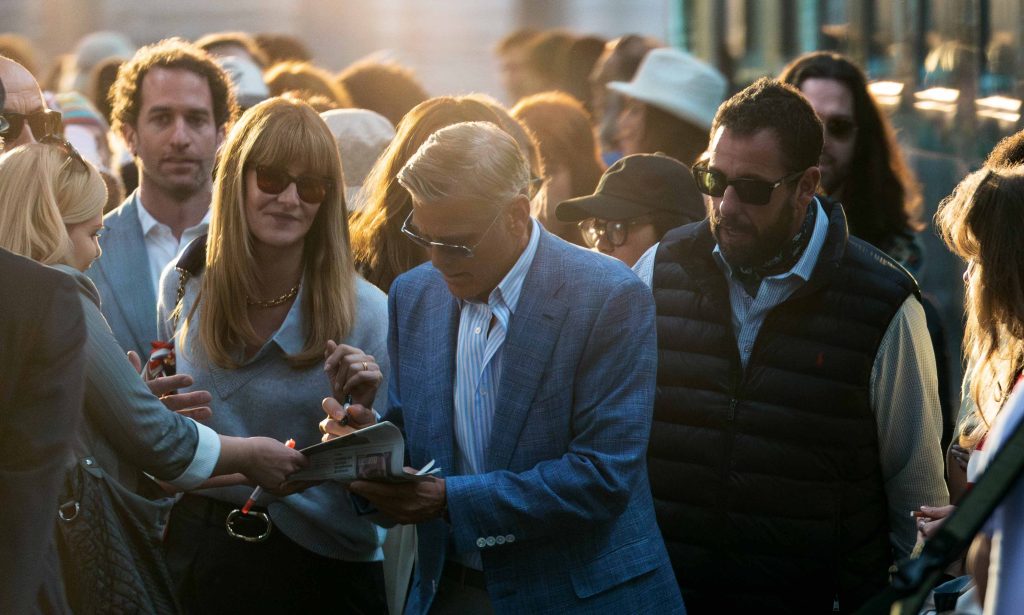
The film has an interesting stage-like mood, certain transitions feel almost like the lights going down and coming back up between scenes. Memories don’t arrive as simple flashbacks they come in with a slightly heightened, almost performed feeling, like Jay is watching parts of his life play out in front of him. They’re warm and soft, but also a bit distant. This choice gives the movie a unique tone, even if it sometimes makes the story feel a little loose.
Visually and musically, the film is rich. Linus Sandgren’s 35mm cinematography gives the story a warm, textured look. Europe isn’t shot like a travel brochure it feels calm and emotional, almost like the world around Jay is breathing with him. Nicholas Britell’s quiet score adds to that mood. Train rides, dim hotel rooms, soft morning light all of it creates a gentle sadness that carries the movie forward even when the plot slows down.
George Clooney gives one of his most grounded performances in years. He drops the usual charm and leans into Jay’s tiredness and confusion. Small looks, pauses, and low-key confessions make his performance feel lived-in. Adam Sandler is just as strong, but in a different way. His Ron is patient, quiet, and worn down by loyalty that has become both love and responsibility, and it all shows in the eyes, wither its Clooney or Sandler how they communicated feelings and inner monologues with their eyes was brilliant, also their chemistry feels natural, like two men who have known each other forever. The only issue is that the movie doesn’t give them quite enough time together; their relationship is the heart of the story, but it feels slightly underused.
As the film goes on, its structure becomes a bit limiting. The slow, reflective style is intentional, but at times it leans too far into stillness. The frequent memory fragments are meant to help us understand Jay better, but they sometimes pull us away instead. They create space, but not always insight. Baumbach sets up several emotional threads especially around Ron’s family, the hidden work he does, and the dependence built into their relationship but he doesn’t fully follow through on them. He stays close to themes he’s explored before and passes by others that might have opened up the story even more.
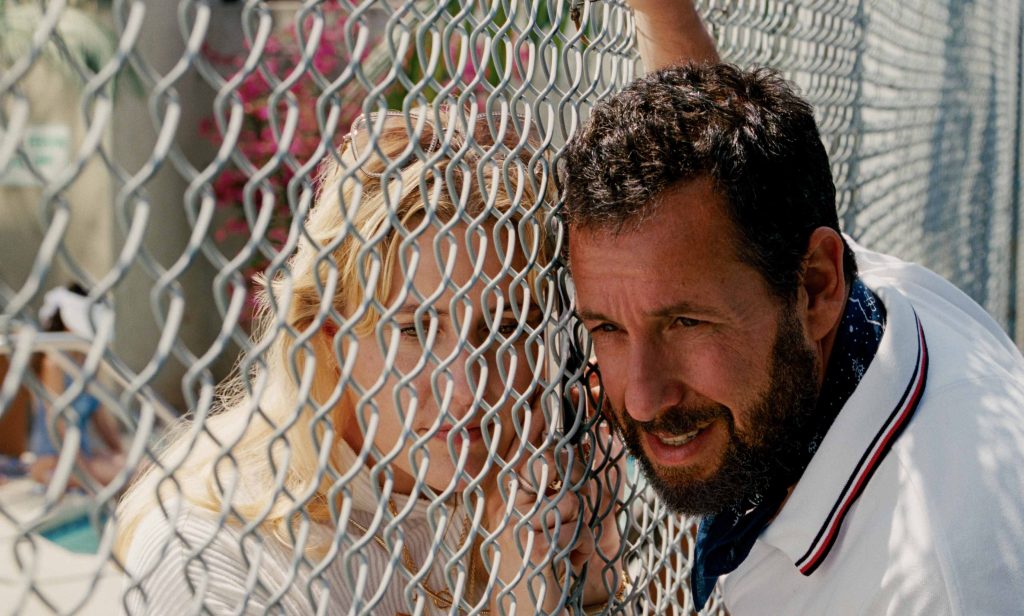
Even so, the dialogue remains one of the strongest parts. Baumbach writes conversations that feel honest and a little messy people interrupting each other, talking over each other, and finally saying something true without realizing it. The actors make these moments shine, keeping the film grounded even when its rhythm drifts.
By the end, Jay Kelly feels like a movie with a warm, beating heart that doesn’t always know exactly how to shape itself. It offers moving questions, beautiful images, and heartfelt performances, but it sometimes circles around ideas instead of fully exploring them. The result is a thoughtful, well-made film that hits real emotional notes but also slow, flat in the middle and leaves some gaps. It’s especially rewarding for viewers who enjoy character-focused stories, even if the uneven pacing keeps it from reaching the emotional clarity it seems to aim for. It’s a film that its totally carried by very good acting, beautiful music, captivating cinematography, but slow events, wobbly narrative when it comes to pacing, and undeveloped potentials. Jay Kelly simply reaches for something meaningful sometimes touching it, sometimes just missing it.