
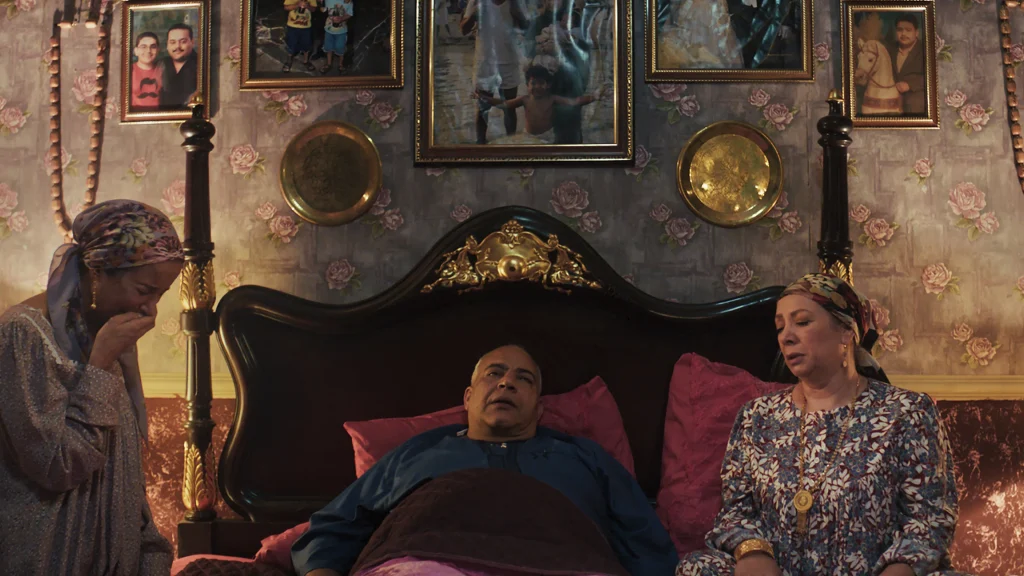
Al Sada Al Afadel opens with the death of a father in a small Egyptian village, and almost immediately the house of mourning turns into something else. Sons try to look steady. Cousins hover with calculations behind their eyes. Neighbors arrive claiming prayer, while clearly hunting for stories. As condolences pile up, secrets follow. Old debts resurface. Private arrangements strain to stay hidden. By nightfall, everyone is guarding something money, reputation, a carefully built lie. The comedy doesn’t come from sharp punchlines. It comes from watching people react when the room starts betraying them. A look lingers too long. A ringtone rings at the worst moment. A piece of furniture quietly tells on its owner. The film’s boldest decision is also its simplest: it trusts the world to do the work.
This is a comedy built on exposure. The production design sticks closely to village taste, then pushes everything just a notch higher. Not enough to break realism, but enough to make contradictions glow. Furniture is slightly too proud. Curtains almost match, but not quite. A wall unit performs status even when no one is paying attention. None of this is random. The ordinary is lifted just enough to become expressive. You understand the tone within seconds, without a line of dialogue. Props follow the same logic. A homemade version of VAR during a football match might look like a throwaway joke, but it’s really a statement of identity. This village mirrors modern habits on its own terms, turning imitation into character and character into laughs.
The cultural choices feel lived in, not displayed. Cars, clothes, and phones aren’t background decoration; they’re social signals. An old sedan that refuses to die. A phone that’s two generations behind but still clutched with pride. Each detail quietly places its owner on the social ladder. The dialect does the same work. The accent is heavier than television polish on purpose. Comedy thrives when small things are stretched just enough to be seen. A longer vowel, a stubborn idiom, a greeting that lingers too long suddenly everyday speech reflects back at us with comic clarity. Even the intentionally flashy earrings on a side character aren’t a cheap joke. They’re a precise signal of taste, aspiration, and how image becomes currency. For anyone who grew up in the Delta or the countryside, the film is full of familiar signals: the way chairs migrate during a wake, how whispers travel faster than facts, how bargaining begins with a sigh and ends with a smile that means nothing has been settled.
We loved how confidently the writers steer the whole thing. You can feel their fingerprints on every turn: they don’t just set up a plot and push characters through it they build situations that grow naturally, even stubbornly, the way real family problems do. Instead of flashy speeches or “big moment” dialogue, the writers lean on behavior, they let a half‑truth spread, let a misunderstanding breathe, then watch as it ricochets through the house, the village, and every ego in the way.
You can also tell the writers represented in Mostafa Sakr, Mohamed Ezz Eldin & Abdelrahman Gawish trust their audience. They don’t underline every setup or force a laugh. They plant things quietly and let you make the connection when it comes back around. The humor lands because it’s earned. The tension builds because the writers keep stacking choices, not coincidences.
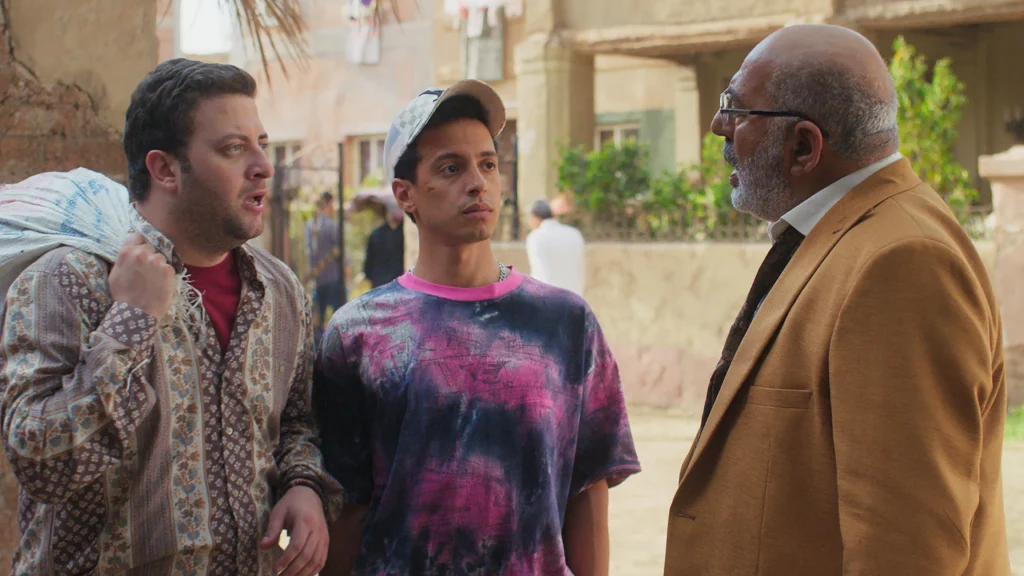
What stood out the most also is the use of colors that refuses to let the film drift. Purple presses against pink, green challenges red and yellow keeps returning across the whole film. The palette isn’t decoration. It’s an attention tool. There’s no dead space where your eye relaxes too much. Every frame holds texture, contrast, or a visual disagreement that keeps you engaged, even when the joke is still warming up. The camera works with the actors, not above them, angles respect the audience. You’re shown exactly what you need, often a moment before or after the characters notice it themselves. That slight gap is where the laugh lands.
Editing plays its part quietly but decisively. Cuts arrive like punchlines. A heated claim jumps straight to a deadpan reaction. A confrontation builds, then snaps to something painfully ordinary. The tension pops, and the laugh escapes. Camera movement carries attitude too, a slow drift toward a revealing detail feels like a raised eyebrow. The retreat afterward feels polite, almost guilty. Nothing is explained. The film trusts you to connect the beats. The rhythm does the rest.
The story moves like a rolling mass one revelation pushes the next into motion, every attempt to regain control peels back another layer of the family’s carefully built image. Characters start out moving side by side, then cross paths at the worst possible moments, colliding in ways that shift power and obligation. Time is organized more carefully than the chaos suggests.
The film laughs with its characters, not at them. You recognize their flaws without losing empathy. The performances reflect that choice. No one is trying to steal the film. The ensemble agrees on the same tone. Some characters lean broader under pressure, others stay restrained and let framing do the work. The balance holds because everyone is serious about being funny. And that is done with an impeccable big ensemble of actors that each of them handcrafted their performance in a genuine and effortless manner that enforces every situation with relativity and sarcasm. And we loved each and every single performance from everyone, be it Shahine in his panicking character, Tyson with his vulnerable hidden truth, Bayomi Foad which was pure essence of comedy, Intisar and her unexpected responses to the trio Taha, Michele and Ali Sobhy anchoring a lot of the comedy and more. And that hints two things how managing this group of talent requires a lot of directing skills and high professionalism from the actors. And how the actors immersed themselves in this world crated by director and the brilliant writers.
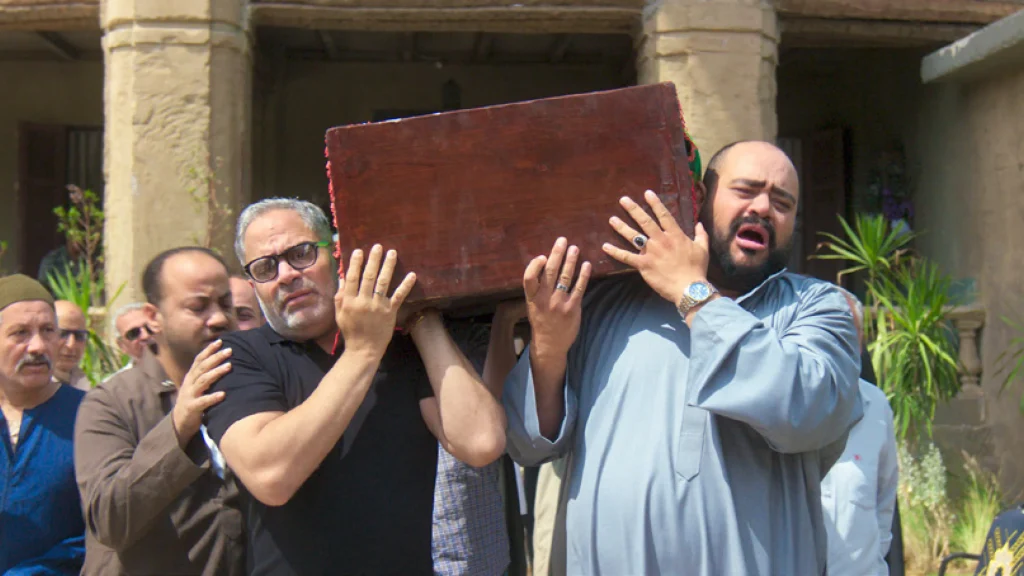
Authority doesn’t disappear with the father. It echoes. In objects. In rooms. In borrowed confidence. The eldest son carries duty like a borrowed coat. Siblings form alliances that last exactly as long as convenience allows. Cousins calculate in corners and perform piety in public. The chaos feels wild, but it follows a pattern, like a family ledger being updated in real time with the help of brilliant choice of music that knows when to step in and when to back off. It nudges momentum when needed and stays quiet when the room can speak for itself. It never competes with the image.
El Shenawy’s direction is steady and unshowy. He doesn’t chase scenes; he builds an environment and trusts it. Every department speaks the same language design, performance, camera, editing, sound without any of them pushing for attention. He lets awkwardness stretch just long enough to become funny. He allows disorder without losing control. When the film lingers, it’s because he’s choosing generosity over efficiency. He wants people to feel whole, not functional.
If the film stumbles which I don’t think it did at all, the main comment I found shared across is that it’s a bit long durationally, and I believe it’s because the film is trying to be fair to every character line. That ambition softens the middle, but it also gives the experience warmth. The world never goes flat. Color, framing, and rhythm keep offering small rewards. Al Sada Al Afadel isn’t built on gags. It’s built on observation. On details that keep working even after the line ends. A couch that almost matches. A ring that speaks too loudly. A streak of yellow that appears just as your attention threatens to drift. That’s why the film holds. It trusts craft over shortcuts, ensemble over ego, and the audience over explanation.