
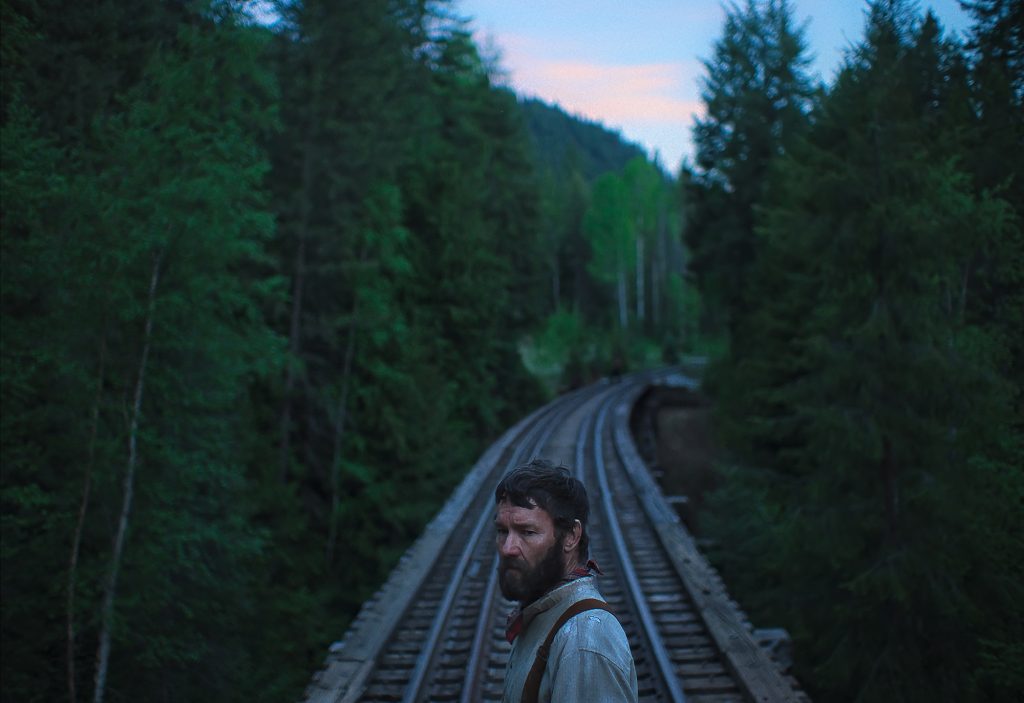
Train Dreams is the kind of film that makes you wish you hadn’t watched it at home. Not because Netflix is the wrong place for it, but because this movie feels too big for a TV. It feels like it needs a massive screen where trees can tower over you, where silence has weight, and where the music hits you in the chest before your ears even catch it. From the opening minutes, it becomes clear this isn’t just something to watch. It’s something to step into. Sometimes cinema isn’t about plot at all. It’s about presence, and Train Dreams understands that completely.
We follow Robert Grainier, a railroad worker in early 1900s America. His life unfolds through labor, family, heartbreak, and the slow drift of time in a country that’s changing faster than he can understand. On paper, it sounds simple. On screen, it feels like memory. His experiences unfold like recollections that are foggy at the edges but sharp where it matters. Marriage, loss, tragedy, a devastating wildfire, even moments that feel almost supernatural. These aren’t just events. They feel like the texture of a life. The film shows how an ordinary existence can carry enormous weight to the person living it. It isn’t really about what he survives on the outside. It’s about surviving what’s happening inside his own mind.
Visually, this movie is a dream for anyone who loves cinema. You can tell it was made for a theater. The cinematography is on another level. That first falling tree sets the tone. The camera doesn’t just watch. It participates. Nature feels alive. The forests, the rivers, the mud, the cabins. Everything looks so real you almost expect to feel damp grass under your shoes. The shades of green alone feel like their own language. After a few scenes, you’re no longer observing Grainier’s world. You’re standing in it.
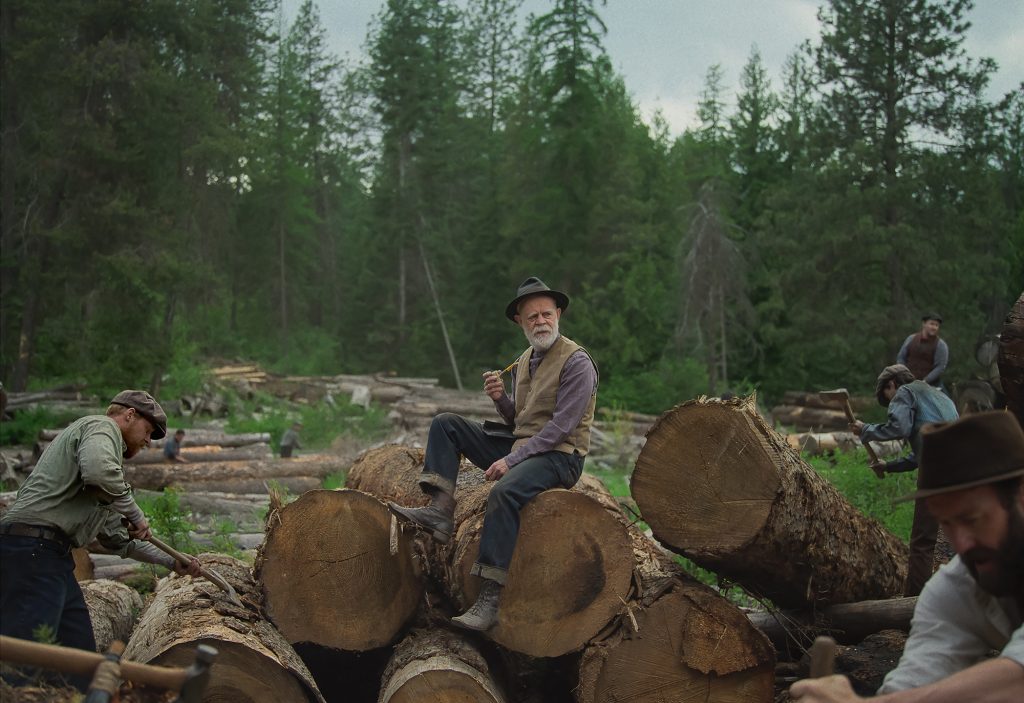
The technical craft matches the ambition. The aspect ratio, the camera movement, the editing, the score, the production design, all of it works together like different instruments in the same song. Even the quiet scenes feel like they matter. Nothing drags, but nothing rushes either. Music never overwhelms the moment. It supports it. The director seems to guide everything with a steady hand, inviting the audience in instead of showing off.
The performances push the film even further. Joel Edgerton gives what might be one of the strongest performances of his career. He plays Robert as a man full of love, fear, humor, fatigue, and resilience, and he never forces any of it. Felicity Jones brings warmth and depth to her scenes, anchoring the emotional stakes without ever feeling like she’s just there to support someone else’s story. William H. Macy adds small moments of humor and heart that make the world feel lived-in rather than staged.
At its core, the movie is about life. Not the glamorous parts. The regular parts that turn out to define us. The dreams we chase, the memories that haunt us, the time we never get back. It asks how someone can be consumed by purpose or hope and still forget to look around. It shows how life can slip between your fingers without you realizing it. The sentimentality never feels cheap. It’s earned.
There’s also a quiet awareness of the natural world. Modernity creeps in. The wild shrinks. Nature responds. None of it feels preachy. It’s more like the movie is quietly acknowledging cause and effect, scene by scene.
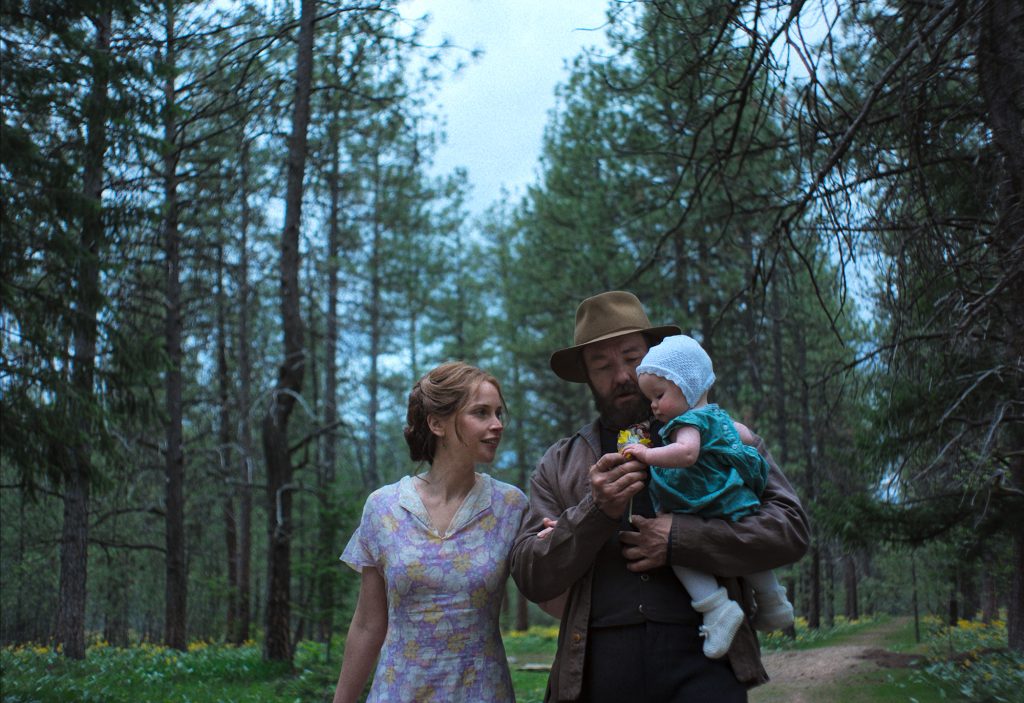
Everything loops back in a way that feels complete. From the first falling tree to the moments of growth and reflection near the end, the movie circles around itself and lands softly. Even the calm scenes feel loaded with meaning, as if the film knows the audience is ready to carry the story the rest of the way.
In the end, Train Dreams isn’t interested in trying to be extraordinary. It’s interested in showing how ordinary life already is. It immerses you in a world and leaves you with the feeling that you’ve lived someone else’s life for a while. Visually stunning, emotionally honest, technically confident. It reminds you why cinema matters at all. Because sometimes, a film doesn’t just show you something. It lets you feel it.