
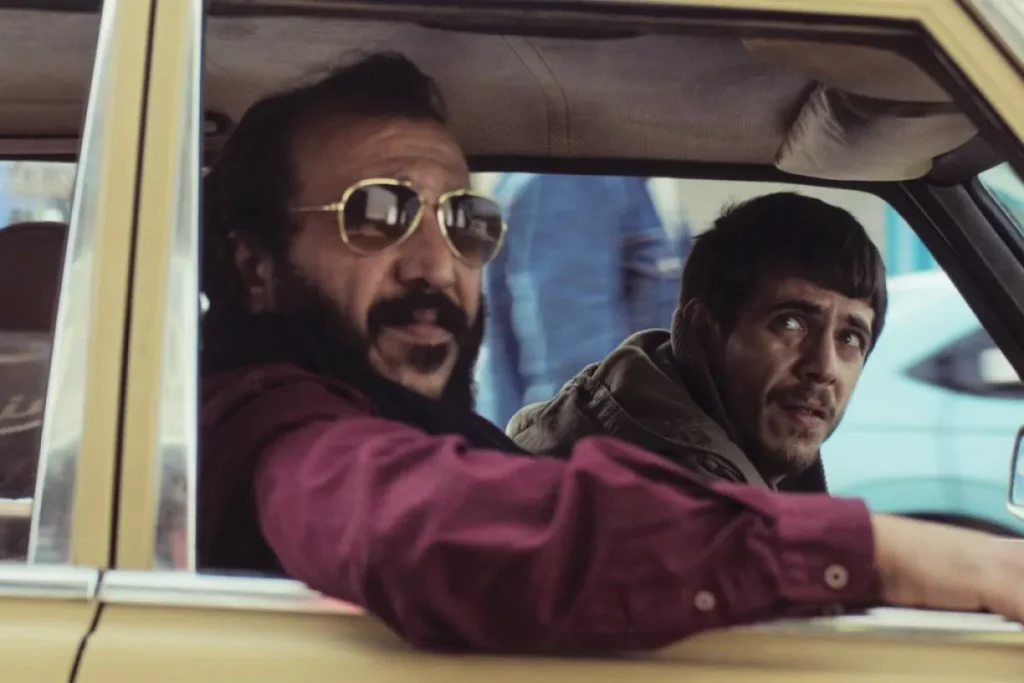
Once Upon a Time in Gaza is a darkly comic yet haunting portrait of life under siege. Set in Gaza shortly after 2007, the film follows Yahya, a young student, and Osama, a falafel shop owner with a hidden side, as they navigate the chaos of crime, corruption, and survival. Through its absurdist humor, the movie captures the surreal contradictions of daily life in a city shaped by oppression and resilience.
The Nasser brothers — Arab and Tarzan Nasser — have long been emerging voices in Palestinian cinema, crafting stories that are as intimate as they are politically resonant. With Once Upon a Time in Gaza, they return with a work that is simultaneously tragic, comic, and profoundly human, offering a rare glimpse into Gaza not through headlines or statistics but through lived, breathing lives.
From the opening frames, the film’s cinematography captures Gaza in all its layered complexity. The camera lingers on ordinary streets, homes, and communal spaces, yet these mundane backdrops become stages for the stories.
The score shifts between haunting melancholy and playful rhythms, while ambient sounds — the persistent drone buzzing, footsteps, distant commotion — subtly reinforce the tension that underlies daily life in Gaza. The drone buzzing, ever-present in reality, reflects the constant danger and oppressive conditions that residents have become accustomed to hearing 24/7. In the CIFF Q&A, the Nasser brothers explained that this seemingly small detail carries enormous significance: most news and media focus on how people in Gaza die, turning lives into numbers and statistics. This film, however, gives them life — showing how they eat, drink, sleep, dream, laugh, and go about daily existence. By embedding the drone’s hum into the soundscape, the brothers not only depict the harsh realities but also humanize Gaza’s residents, countering decades of dehumanizing narratives and allowing audiences to witness life lived fully, not just lost.
Through carefully timed interactions, recurring motifs like the funeral march, and scenes of daring improvisation, the Nasser brothers immerse viewers in a world where humor becomes a coping mechanism, and creativity is an act of defiance. Characters like Osama (Majd Eid) balance personal ambitions, familial responsibilities, and the constant undercurrent of societal and political pressures, revealing a Gaza rarely seen on screen — full of life, irony, and the quiet dignity of people enduring hardships with courage and humor and it emerges as a lifeline in the film, it is raw, phonological, and entirely believable — a coping mechanism and a survival strategy. In moments of absurdity and tension, laughter becomes both a personal and collective act of resistance, humor feels organic, highlighting the resilience and humanity of the characters.
The script and dialogue are precise, authentic, and layered with subtle social critique. Bureaucratic absurdities, such as the impossibility of securing West Bank permissions, are portrayed matter-of-factly — lines like a clerk casually stating “homa hek bemzaghom” turn what outsiders might perceive as monumental frustrations into normalized, everyday realities. These interactions are complemented by editing and shot composition, which move seamlessly within and between scenes, allowing the audience to absorb both the comedy and the emotional weight of each moment.
Character work stands out, particularly in the portrayal of Osama, played by Majd Eid, whose nuanced performance balances humor, vulnerability, and courage. Scenes like the dance sequence is probably the highlight of Osama’s Character, These sequences affirm life in Gaza as full, complex, and resistive to dehumanization often perpetuated by external media narratives.
Perhaps most profoundly, the film emphasizes human life beyond the struggle. While the occupation shapes everything, it does not define the characters’ existence entirely. The Nasser brothers depict their subjects as complex, full individuals, resisting the reduction of Palestinians to statistics or political symbols.
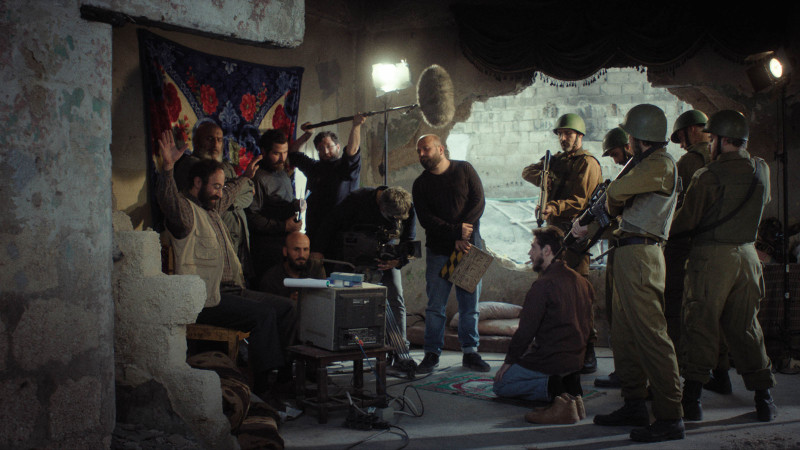
Once Upon a Time in Gaza is a bold and ambitious film that manages to capture both the grit and resilience of its characters under extraordinarily challenging circumstances. The story is divided into two distinct halves, and while this transition between them a bit disjointed, I found that the shift allowed for a deeper exploration of the filmmaking process under constraints, though I didn’t care much about the content of that internal film but more about how it was shot, and Yehya’s journey to act in it which I wanted to see more of.
Osama’s character was the beating heart of the movie and its is captivating as a character and paired with Majd’s brilliant portraying of it brought it more to life, but there’s definitely room for more — I found myself wanting to see deeper layers and more of his journey.
Overall, Once Upon a Time in Gaza is a thought-provoking, visually compelling experience that leaves a lasting impression. It’s a film that dares to tell the story of its characters’ lives — their struggles, resilience, and creativity — in a way that is rarely seen, and it does so with heart, honesty, and remarkable ingenuity.
At CIFF 46, this felt like more than just a premiere — it was a homecoming, a reclamation. And for audiences worldwide, it’s a powerful reminder that even in the shadow of conflict people live.